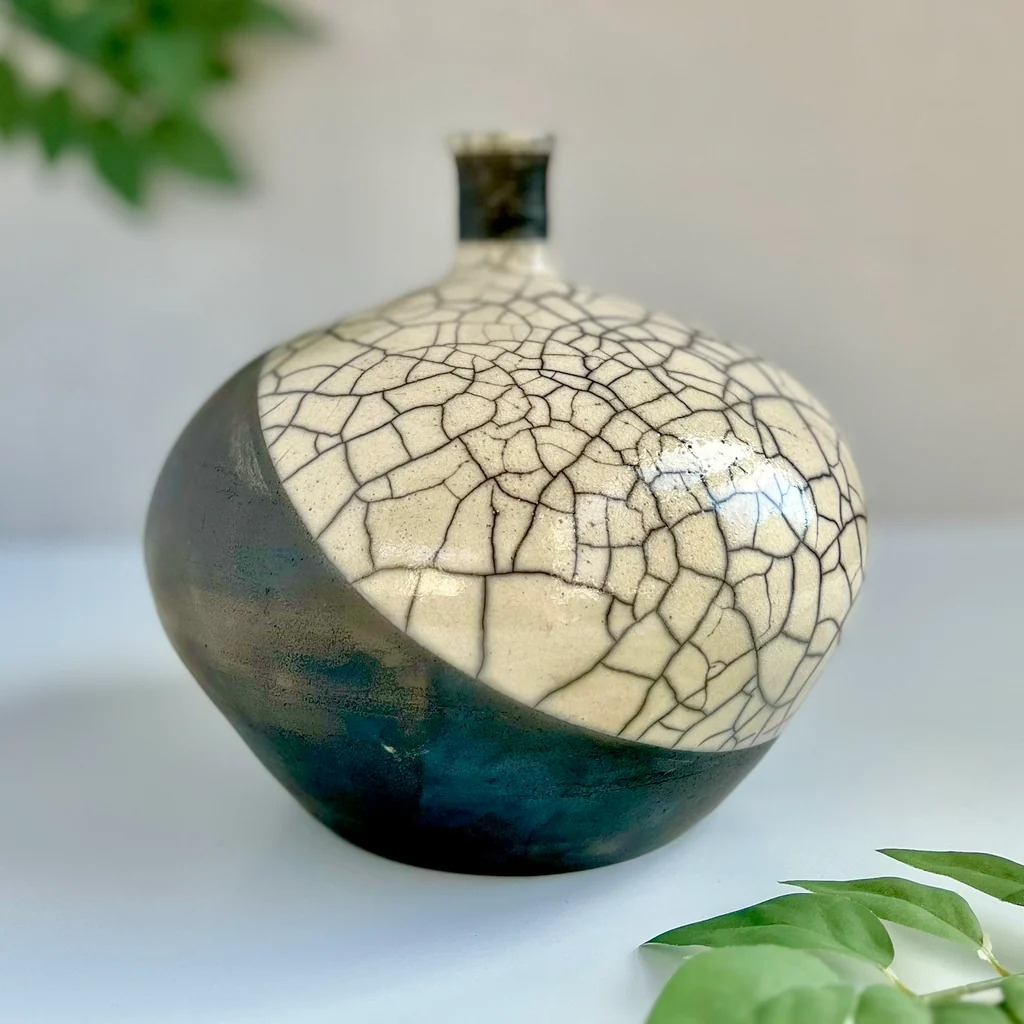
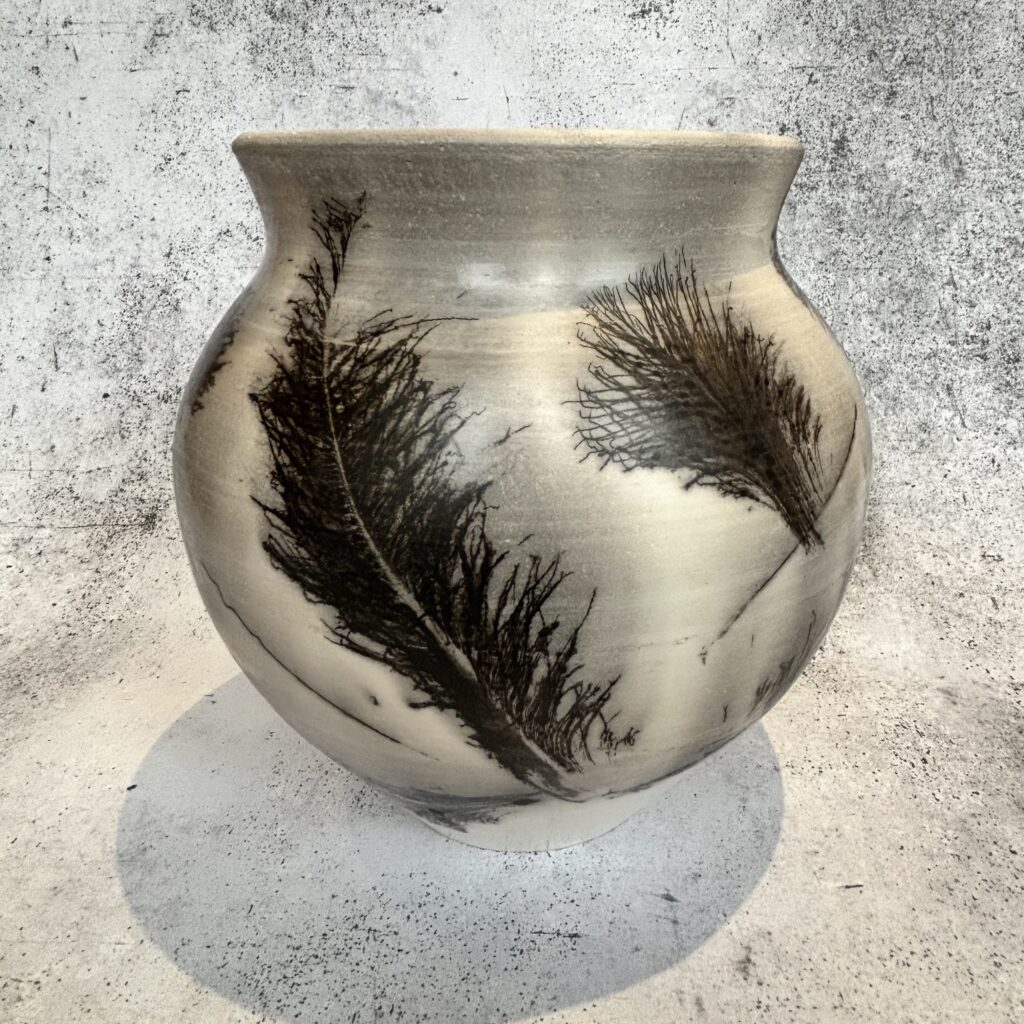
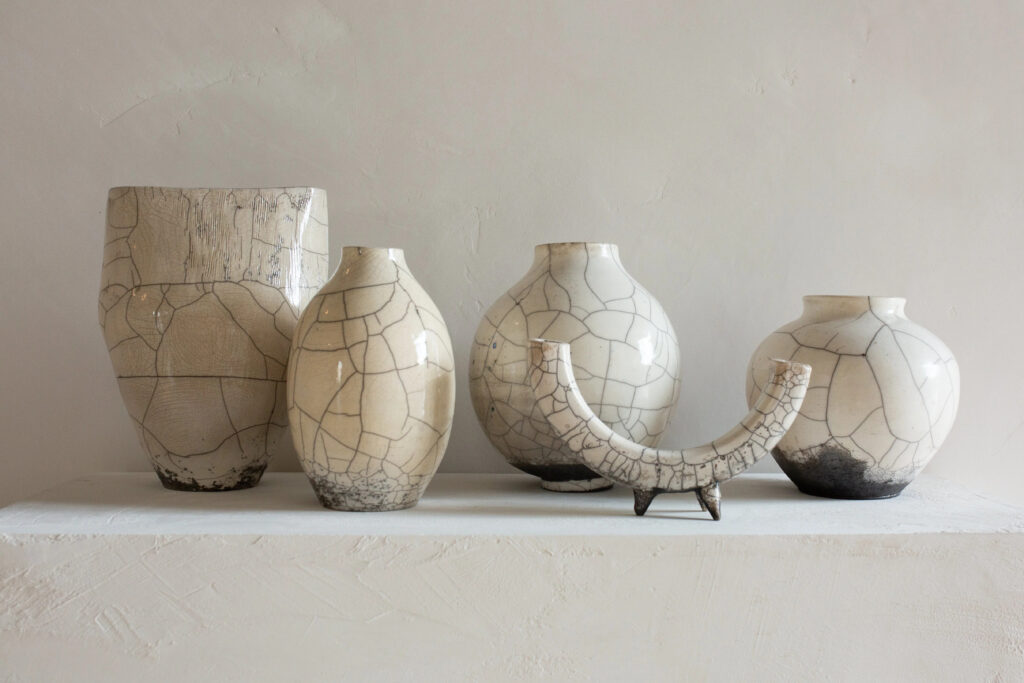
Raku pottery is an expressive, fast-firing ceramic technique originating in 16th-century Japan. It involves pulling glowing, hot pieces directly from a kiln and placing them into combustible materials like sawdust or paper to create dramatic crackle patterns, carbonization, and metallic lusters.
History and Origins:
- Japanese Roots: Raku first appeared during the Momoyama period around 1550, traditionally crafted for use in Japanese tea ceremonies.
- The Raku Family: The style was pioneered by Tanaka Chōjirō and has been passed down through 16 generations of the Raku family in Kyoto.
- Western Adaptation: In the 1960s, American potter Paul Soldner modified the tradition by introducing post-firing reduction chambers, giving birth to Western-style raku.
The Firing Process:
- Low Temperatures: Pieces are bisque-fired, glazed, and then heated rapidly in a small kiln up to around 1,800°F–1,850°F (982°C–1,010°C).
- The Pull: Using long metal tongs, the potter extracts the pieces while they are still glowing red-hot.
- Reduction Chamber: The hot pottery is transferred into a container filled with flammable items like newspaper, straw, or horsehair, which immediately ignite.
- Sealing: The container is covered to starve the fire of oxygen, forcing the smoke and carbon to etch unique patterns into the clay and glazes.
Unique Characteristics:
- Crackle Glazes: Thermal shock causes fine, web-like crackle patterns across the glaze.
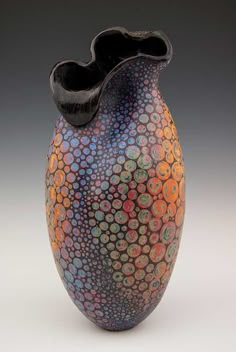
- Metallic and Iridescent Sheens: Copper- and iron-rich glazes react to the oxygen-depleted environment to produce rainbow, green, gold, and deep red lusters.
- Decorative Use: Because the clay is porous and low-fired without full vitrification, raku pottery is meant for art and decoration rather than holding food or liquid.
Raku Examples: