
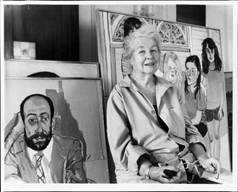
An Extraordinary American Artist
Alice Neel was one of the most important and distinctive American portrait painters of the twentieth century. Celebrated for her emotionally revealing portraits, bold use of color, and remarkable ability to capture the personalities of her subjects, Neel developed a deeply personal approach to painting that challenged traditional conventions. Her work explored the complexities of human nature, portraying people with extraordinary honesty, sensitivity, and psychological insight. Born on January 28, 1900, in Merion Square, Pennsylvania, Neel studied at the Philadelphia School of Design for Women, graduating in 1925. She subsequently spent time in Cuba before settling in New York City in 1927, where she would spend most of her artistic career. Living for many years in Greenwich Village and Spanish Harlem, she found inspiration among her neighbors, family members, fellow artists, writers, political activists, and ordinary working-class Americans. Unlike many of her contemporaries, who embraced Abstract Expressionism during the mid-twentieth century, Neel remained devoted to painting the human figure. Rather than creating idealized likenesses, she was interested in revealing the character, vulnerabilities, and emotional lives of the people sitting before her. She often exaggerated facial features, employed unconventional colors, and left portions of her canvases seemingly unfinished, allowing each portrait to communicate something deeper than physical appearance. Neel’s personal life was marked by considerable hardship, including the loss of a young daughter, separation from another daughter, financial instability, and periods of emotional distress. These experiences profoundly shaped her understanding of humanity and strengthened her determination to portray people without sentimentality or pretense. Her subjects might appear anxious, exhausted, proud, lonely, or confident, but they were always treated as individuals worthy of attention.
Artistic Style and Philosophy
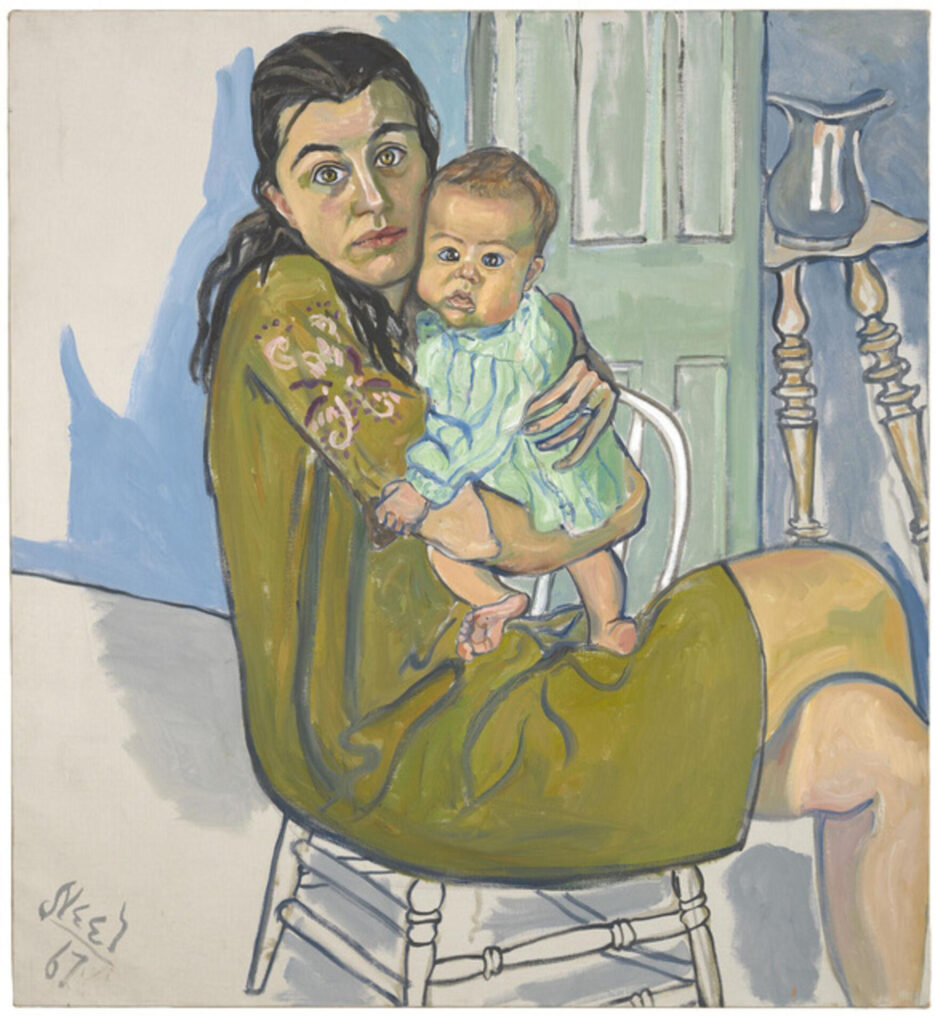
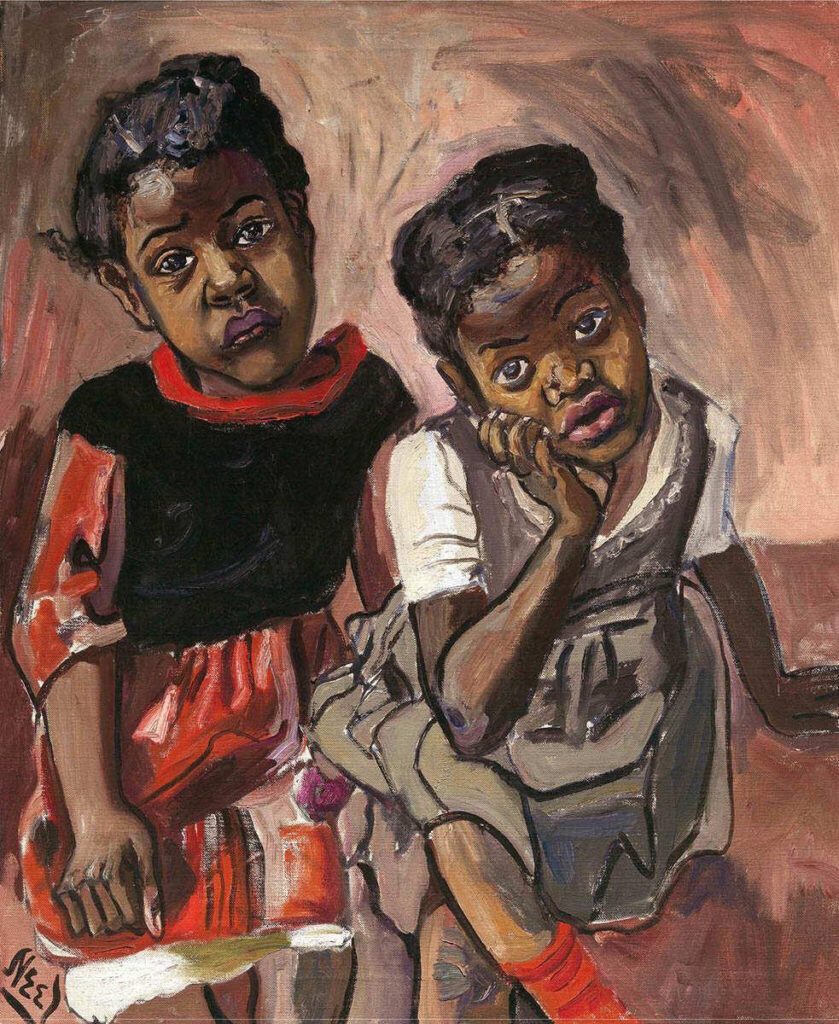
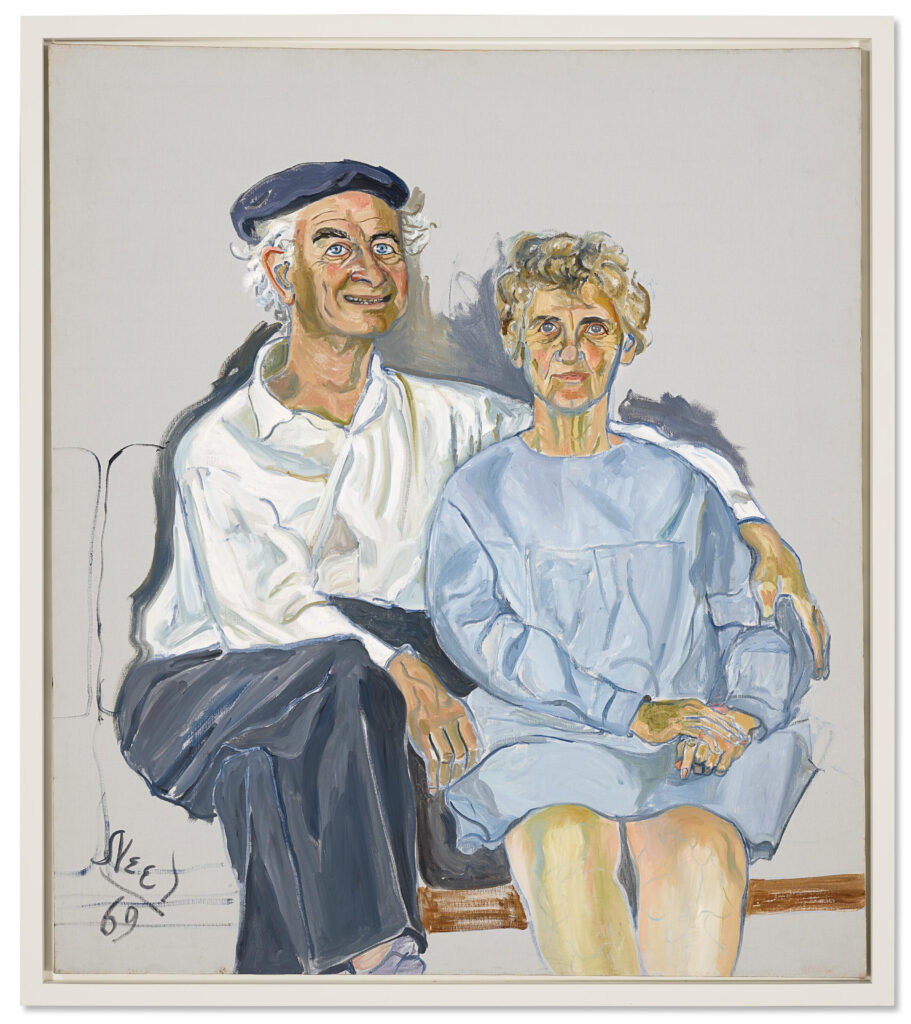
Neel described herself as a “collector of souls,” an expression that beautifully summarizes her artistic philosophy. Her portraits were not simply records of how people looked; they were explorations of who those people were. Her recognizable style combined expressive brushwork, strong contour lines, vibrant but sometimes unexpected color combinations, and an exceptional sensitivity to posture and facial expression. Neel frequently placed her subjects against relatively simple backgrounds, directing attention toward their personalities and emotional presence. She was especially interested in representing people often overlooked in traditional fine art, including immigrants, children, pregnant women, working-class families, and members of marginalized communities. She also painted prominent cultural figures, capturing aspects of their personalities that public images seldom revealed. In an era when women artists faced significant barriers to recognition, Neel pursued her artistic vision with exceptional independence. Her unidealized portrayals of women’s bodies, motherhood, aging, and sexuality were particularly groundbreaking.

Recognition and Lasting Legacy
Although Neel worked for decades in relative obscurity, her reputation grew substantially during the 1960s and 1970s, coinciding with renewed interest in figurative painting and the rise of the feminist art movement. A pivotal moment came in 1974, when the Whitney Museum of American Art in New York presented a major retrospective of her paintings. By then in her seventies, Neel was finally receiving the institutional recognition that had eluded her for much of her career. She continued painting into her eighties, remaining artistically adventurous until her death on October 13, 1984. Today, her work is represented in major museums, including the Metropolitan Museum of Art, the Museum of Modern Art, and the Whitney Museum of American Art. She is widely regarded as one of America’s greatest portrait painters and a pioneering voice in modern figurative art.
An Enduring Contribution to American Art
Alice Neel transformed portrait painting by insisting that every human being, regardless of fame, wealth, age, or social position, possessed a story worth telling. Her paintings are simultaneously intimate portraits and historical documents, capturing the emotional and social landscape of twentieth-century America. What makes her work especially compelling is its timeless humanity. Rather than presenting flawless or idealized subjects, Neel celebrated the imperfections, contradictions, and individuality that make people fascinating. Her legacy lies not merely in how she painted people, but in how profoundly she understood them. More than four decades after her death, Alice Neel’s portraits remain as emotionally immediate, provocative, and relevant as when they were first created.This expressive portrait shows a father holding an infant while a young girl stands beside him. Characteristically direct and intimate, the painting reflects Neel’s fascination with family relationships, childhood, and the complexities of ordinary domestic life.
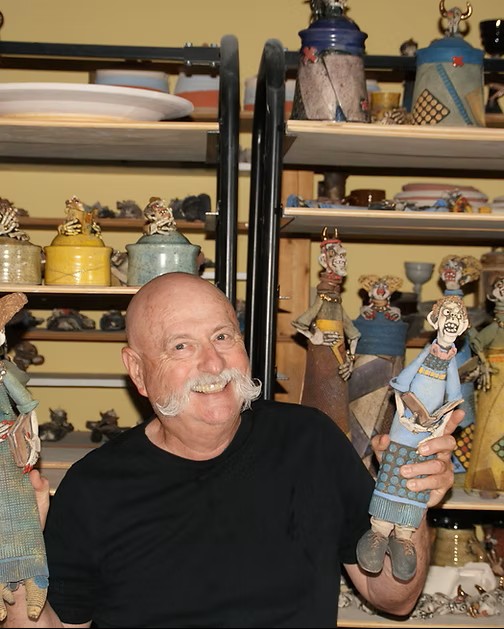
Dee Schaad was born and raised in Nebraska and has an MFA from Hixson-Leid College of Fine Arts at the University of Nebraska Lincoln. He taught ceramics at the University of Indianapolis for 39 years. He was chairman of the Department of Art and Design from 1994 through 2010. He currently is Professor Emeritus. His work is included in several books and in public and private collections and has been exhibited nationally. His writing has appeared in a number of National publications and he has made several instructional videos for American Art Clay Company. As a ceramist, his work covers a broad spectrum of ceramic processes. He works in both stoneware and earthenware. His work consists of large and small sculptural pieces and traditional, more functional vessel formatted objects. Dee Schaad was named University of Indianapolis’ Teacher of the Year for 2006. During the summer of 2007 he was awarded a Creative Renewal Arts Fellowship from the Arts Council of Indianapolis. Dee Schaad had an installation at the Indianapolis International Airport during 2014 and 2026. He continues to actively exhibit and conducts ceramic workshops throughout the United States. In July of 2025, he was selected to be one of 50 over 50 by “Indianapolis Monthly” magazine.